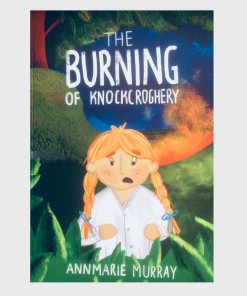
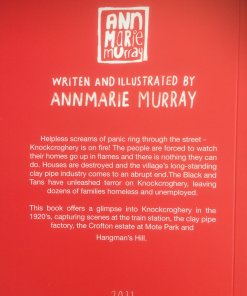
This colourful children’s book brings to life the story of the burning of Knockcroghery in 1921 by the Black and Tans and the resilience of the local community as they deal with the aftermath of their destroyed village. Told through the eyes of young Sally Finnegan, it is vividly illustrated and contains interesting facts on the Crofton estate at Mote Park, the Clay Pipe industry and the backdrop of revolutionary Ireland.
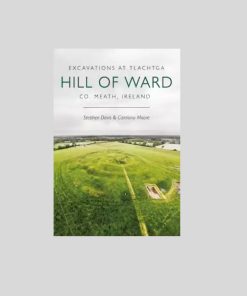
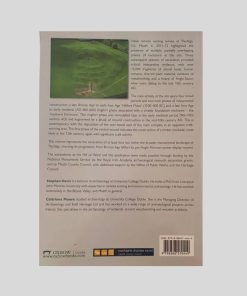
Excavations at Tlachtga, Hill of Ward, Co. Meath, Ireland
by Stephen Davis and Caitríona Moore
Initial remote sensing survey at Tlachtga, Co. Meath in 2011–12 highlighted the presence of multiple, partially overlapping phases of enclosure at the site. Three subsequent seasons of excavation provided critical interpretive evidence, with over 15,000 fragments of animal bone, human remains, charred plant material, evidence of metalworking, and a hoard of Anglo-Saxon silver coins dating to the late 10th century AD.
The main activity at the site spans four broad periods and two main phases of monumental construction: a late Bronze Age to early Iron Age ‘Hillfort Phase’ (1100–400 BC) and a late Iron Age to early medieval (AD 400–600) ringfort phase associated with a smaller foundation enclosure – the ‘Southern Enclosure’. This ringfort phase was remodeled later in the early medieval period (9th–10th century AD) and augmented by a phase of mound construction in the mid-10th century AD. This is contemporary with the deposition of the coin hoard east of the main complex in an apparent craft-working area. The final phase of the central mound indicates the construction of a timber stockade, most likely in the 12th century, again with significant craft activity.
This volume represents the excavation of at least four loci within the broader monumental landscape of Tlachtga, charting its progression from Bronze Age hillfort to pre-Anglo Norman power display mound.
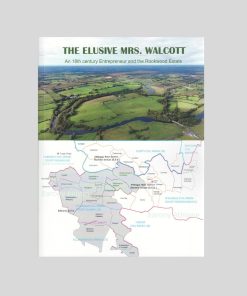
The Elusive Mrs. Walcott: An 18th Century Entrepreneur and the Rookwood Estate, is a compelling
work that seamlessly combines local history with genealogical facts. Drawing on an impressive array
of primary sources, including leases, wills, land, church and state records, historian and genealogist
Nuala Farrell-Griffin explores her Farrell and Flaherty ancestors and their connection to Lettice
Caulfield Walcott. Known primarily as the woman at whose sole expense the Roscommon Infirmary
was built in 1783, and is obliquely commemorated on a stone plaque in the Foyer as, “Mrs. Walcott,
sister to the Lord Chief justice Caulfield of Donamon”. Naula’s meticulous research brings this
remarkable woman, and several of her ‘attached relatives’ to life.
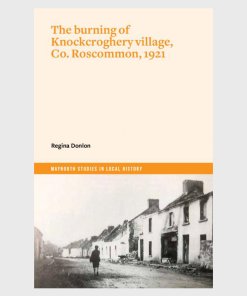
The Burning of Knockcroghery Village, Co. Roscommon, 1921
Regina Donlon
On the evening of 20 June 1921, Colonel-Commandant Thomas Stanton Lambert was assassinated at Benown near Glasson in Co. Westmeath. Hours later, the small village of Knockcroghery in south Co. Roscommon was set ablaze by the British forces, seemingly in an act of retribution for Lambert’s murder. The burning was an unfortunate case of mistaken identity, however, that ultimately resulted in the decimation of the local economy and heralded the end of clay-pipe production in the area. This study explores the complex world of rural Ireland against the backdrop of the Irish War of Independence, while demonstrating how local communities were impacted by evolving national narratives. Although it later emerged that the Knockcroghery company of the Irish Republican Army was not involved in Lambert’s killing, this study examines how the social and economic fabric of that community was altered as a result.
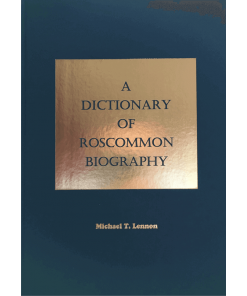
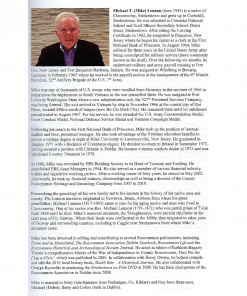
This DIGITAL VERSION of ‘A Dictionary of Roscommon Biography’ contains 5000 individual entries which describe the careers of people in all fields of endeavour, including politics, religion, law, literature, journalism, business, trades, medicine, sport, engineering, painting, music and entertainment and is a must for anyone with an interest or connection with Co. Roscommon.
Upon your purchase of this digital copy, Rathcroghan Visitor Centre will forward your contact details to the author, who will then personally email your electronic copy in PDF format.*
*please note that by purchasing this version, you agree to the sharing of your contact details with the author Mike Lennon in order to facilitate the file transfer.
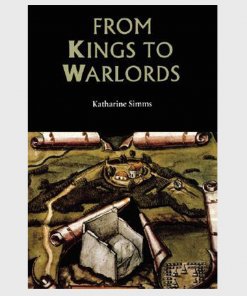
From Kings to Warlords: The Changing Political Structure of Gaelic Ireland in the Later Middle Ages – Katharine Simms
The Norman invasion of Ireland (1169) did not result in a complete conquest, and those native Irish chieftains who retained independent control of their territories achieved a recovery of power in the later middle ages. Katharine Simms studies the experience of the resurgent chieftains, who were undergoing significant developments during this period. The most obvious signs of change were the gradual disappearance of the title rí (king), and the ubiquitous presence of mercenary soldiers. On a deeper level, the institution of kingship itself had died, as is shown by this study of the election and inauguration of Irish kings, their counsellors, officials, vassals, army, and sources of revenue, as they evolved between the twelfth and sixteenth centuries. Sources such as the Irish chronicles, bardic poetry, genealogies, brehon charters and rentals, family-tract and sagas are all used, in addition to the more familiar evidence of the Anglo-Norman administration, the Church, and Tudor state papers.
Dr Katharine Simms lectures in the Department of Medieval History, Trinity College, Dublin.
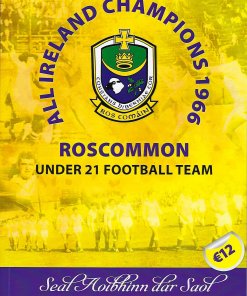
Roscommon Under 21 Football Team – All Ireland Champions 1966
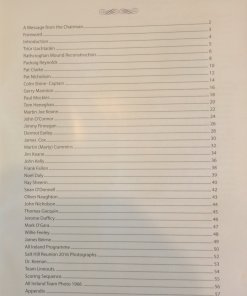
Compiled by Paul Mockler, this 90 page fully illustrated colour journal was produced to commemorate the great achievements of the mighty Roscommon Under 21’s who won All Ireland glory in 1966.
All surplus proceeds from the sale of this journal will be donated to Western Alzheimer’s.
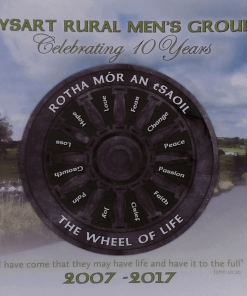
The Dysart Rural Men’s Group was established in 2007 to provide a social outlet for men from the wide catchment area of Dysart, enabling them to meet in the local community centre and engage in various projects/activities.
The men’s group have left a wonderful legacy with this publication and is now to be added to their other projects which are showcased in this book. This publication is replete with beautiful photographs and captures 10 years of memories, friendships, fulfillment, achievements and community spirit.
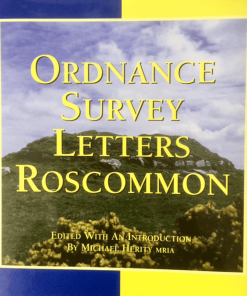
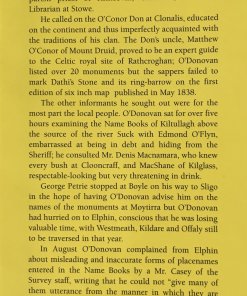
Letters Relating to the Antiquities of the County of Roscommon Containing Information Collected During the Progress of the Ordnance Survey in 1837, edited with an introduction by Michael Herity MRIA.
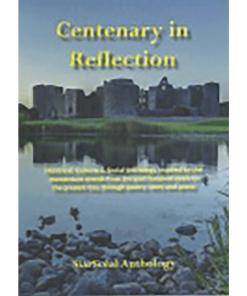
Centenary in Reflection 2016 Anthology is a momentous is snapshot of global and local history and culture; a space created to review times past, voiced by writers and students locally and internationally.
Provocative words on two world wars, emigration, and reminiscences about ‘how we once lived’ are contained within these pages. The story of how, as a nation re-birthed through the 1916 rebellion, it is that event and the fundamental truths proclaimed in the Proclamation of the Republic that haunts the psyche of our imagination, informing our views about the needs of the present as we rise to the challenges that lie ahead.
‘The Irish Republic is entitled to and hereby claims the allegiance of the Irishman and Irishwoman. The Republic guarantees religious and civil liberty, equal rights and equal opportunities to all its citizens.’
Let the story begin.
SiarScéal is an annual festival that celebrates the history and culture of the Roscommon environs, through all art forms and media and with the participation of communities and schools. The Festival also hosts the international Hanna Greally Literary Awards.
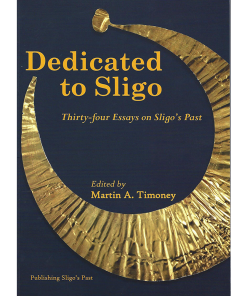
A wide range of authors describe, analyse, interpret and re-interpret parts of the complex understudied, and at times misunderstood, archive of eight thousand years of Co. Sligo’s past.
Drawing on new and exciting knowledge about what Sligo looked like at times in the remote past, the events which changed lifestyles and the products of humble and status craftsmen the authors give us a greater understanding of our county and its place in Ireland’s past and present and they inform us of some inspired intellectual and artistic giants of more recent centuries.
The illustrations draw us out into the Sligo landscape, so richly endowed with the natural beauty, archaeology and history that surrounds us all the days of our lives.
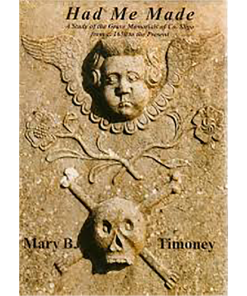
Full Descriptions of Eighty Memorials from all over Co. Sligo with comparative entries for over 500 memorials which commemorate past loved ones, some, the short and only annals of many a departed soul, others monuments of national importance, together with notices, details and location of the graveyards.
The styles of artwork, the first written description of the Masons of Sligo, who so lovingly carved these monuments, notices of the families commemorated, their lives and properties illustrated by 230 photographs, selected from an archive of 7,000 photographs, rubbings, drawings and a map. Provided to assist the reader in appreciating those memorials and the many other memorials to the dead of Co. Sligo of the last 4 centuries.