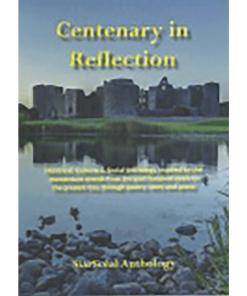
“Centenary In Reflection – Historical, Cultural & Social Anthology Inspired By The Momentum Events From The Past Hundred Years To Present Day Through Poetry, Story & Prose” has been added to your cart. View cart
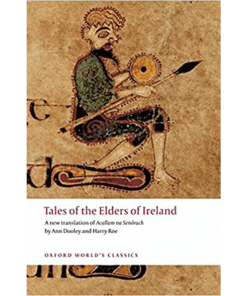
“Dear holy cleric,’ they said, ‘these old warriors tell you no more than a third of their stories, because their memories are faulty. Have these stories written down on poets’ tablets in refined language, so that the hearing of them will provide entertainment for the lords and commons of later times.’ The angels then left them.”
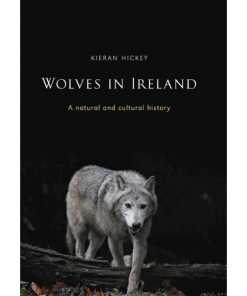
‘A fascinating overview of the wolf in Ireland through the ages. Hickey redresses the demonization of this iconic animal.’ – Ciaran Mc Mahon, Team leader, Dublin zoo
Kieran Hickey is a lecturer in the Department of Geography, NUI Galway. He is the author of Deluge: Ireland’s weather disasters, 2009–2010 (Open Air, 2010).
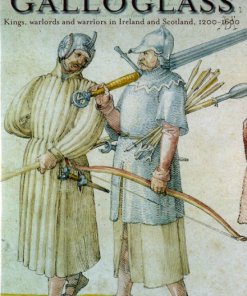
The World of the Galloglass: Kings, Warlords and Warriors in Ireland and Scotland, 1200-1600
This volume contains the proceedings of a recent Edinburgh conference at which scholars discussed the intersection of Scottish and Irish politics and culture in the later Middle Ages. It was a world epitomized by the neglected figure of the galloglass and several of the papers explore the role of these West Highland dynasties and their rapid proliferation throughout Ireland from the late thirteenth century onwards, but the volume also examines the high politics of Scottish royal involvement in Ireland, and the common culture of Gaeldom, particularly as manifested in the corpus of surviving bardic verse.
Contributors include: Steve Boardman, David Caldwell, Alison Cathcart, Seán Duffy, David Edwards, Wilson McLeod, Kenneth Nicholls, Alasdair Ross, Katharine Simms, and Alex Woolf.
Centenary in Reflection 2016 Anthology is a momentous is snapshot of global and local history and culture; a space created to review times past, voiced by writers and students locally and internationally.
Provocative words on two world wars, emigration, and reminiscences about ‘how we once lived’ are contained within these pages. The story of how, as a nation re-birthed through the 1916 rebellion, it is that event and the fundamental truths proclaimed in the Proclamation of the Republic that haunts the psyche of our imagination, informing our views about the needs of the present as we rise to the challenges that lie ahead.
‘The Irish Republic is entitled to and hereby claims the allegiance of the Irishman and Irishwoman. The Republic guarantees religious and civil liberty, equal rights and equal opportunities to all its citizens.’
Let the story begin.
SiarScéal is an annual festival that celebrates the history and culture of the Roscommon environs, through all art forms and media and with the participation of communities and schools. The Festival also hosts the international Hanna Greally Literary Awards.
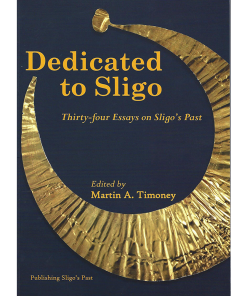
A wide range of authors describe, analyse, interpret and re-interpret parts of the complex understudied, and at times misunderstood, archive of eight thousand years of Co. Sligo’s past.
Drawing on new and exciting knowledge about what Sligo looked like at times in the remote past, the events which changed lifestyles and the products of humble and status craftsmen the authors give us a greater understanding of our county and its place in Ireland’s past and present and they inform us of some inspired intellectual and artistic giants of more recent centuries.
The illustrations draw us out into the Sligo landscape, so richly endowed with the natural beauty, archaeology and history that surrounds us all the days of our lives.
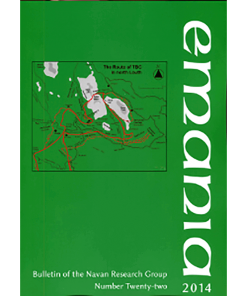
Emania is the premier interdisciplinary journal publishing original research on Ireland’s Celtic past. The main focus of the journal is on the Ulster Cycle of tales, the ancient ‘Royal Sites’ of Ireland and the archaeology and environment of Ireland in the period from the Late Bronze Age until the Early Medieval period.
The contents of issue 22 is as follows:
Editorial
Ranke de Vries: The Ulster Cycle in the Netherlands
J.P. Mallory and Gina Baban: Excavations in Haughey’s Fort East
Meriel McClatchie: Food Production in the Bronze Age: Analysis of Plant Macro-remains from Haughey’s Fort, Co. Armagh
Gina Baban: Late Bronze Age Pottery from the Excavations at Haughey’s Fort East
Dirk Brandherm: Late Bronze Age casting debris and other base metal finds from Haughey’s Fort
R.B. Warner: The Gold Fragments from Haughey’s Fort, Co. Armagh: Description and XRF Analysis
Rena Maguire: The Y-piece: Function, Production, Typology and Possible Origins
Billy Ó Foghlú: Irish Iron Age Horns, and the Conical Spearbutt of Navan: A Mouthpiece Investigation
Chris Lynn: Some Pictish Symbols: Leatherworking Diagrams and Razor Holders?
Grigory Bondarenko: A ‘Kshatriya Revolution’ in the Ulster Cycle?
Paul Gosling: The Route of Táin Bó Cúailnge Revisited
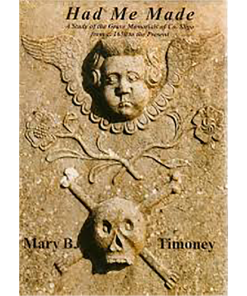
Full Descriptions of Eighty Memorials from all over Co. Sligo with comparative entries for over 500 memorials which commemorate past loved ones, some, the short and only annals of many a departed soul, others monuments of national importance, together with notices, details and location of the graveyards.
The styles of artwork, the first written description of the Masons of Sligo, who so lovingly carved these monuments, notices of the families commemorated, their lives and properties illustrated by 230 photographs, selected from an archive of 7,000 photographs, rubbings, drawings and a map. Provided to assist the reader in appreciating those memorials and the many other memorials to the dead of Co. Sligo of the last 4 centuries.
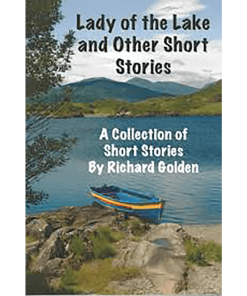
This collection of nineteen short stories deals with murder, the supernatural, immigration, separation, relationships, love and life. While the stories are set mainly in rural Ireland some inevitably cross the Irish sea. They provide a glimpse of Irish life fast disappearing and range from dark comedy to poignancy.
In ‘Lady of the Lake’ the peace and tranquility of a lakeside village is broken by the murder of a quiet if somewhat inquisitive stranger.
The ticking of an old clock brings back childhood memories of a formidable old woman in ‘Kate the Bush.’
The short story ‘The Homecoming’ explores the relationship between a father and son against the background of immigration and advancing years.
In ‘A Grave Matter’, Flaherty’s pub is frequented by local drunkards, headers, wasters and anybody else who happens yo be passing by and has the misfortune to call in.
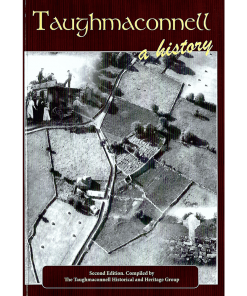
This 2nd edition of the book explores the history and times past of the parish of Taughmaconnell in South Roscommon and comes eighteen years on from the first iteration.
The aim of the book is to provide a window into a way of life, much of which is no longer to be seen. It is the story of struggle, comradeship and an appreciation of community.
Richly illustrated, this book is a valuable resource not just for the people of Roscommon, but a template for memorial studies in other counties.
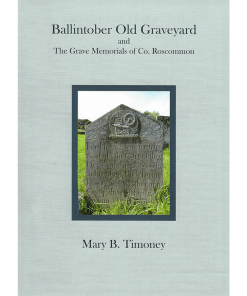
This research began in 2012 with the study of the grave memorials of the late 17th century to the 1860’s in Ballintober Old, Co. Roscommon. The richness of memorial work here is indication of the importance of Ballintober and the O’Conor family. A catalogue of these memorials, including the full inscription, photo and references is given.
Mary B. Timoney, originally from Waterford and living in south Sligo, has been researching graveyard memorials since 1984. She received an M. A. from UCC in 2001 for her study of ‘The Decorated Box Tombs of the Skreen School, Co. Sligo, c. 1780 – 1850’. In 2005 she published ‘Had Me Made, A Study of the Grave Memorials of Co. Sligo fro c. 1650 to the Present’. She has lectured and published on grave memorials in Co.s Cavan, Monaghan, Roscommon and Sligo as well as on the Association for the Preservation of the Memorials of the Dead, Ireland, and on the care of graveyards.


 Out of stock